
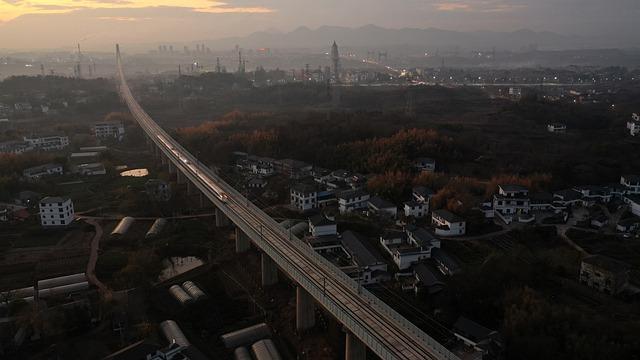
A bold new transportation initiative was unveiled today, proposing a high-speed rail line that promises to transform travel between Boston and Western Massachusetts.The plan aims to provide a faster, more efficient connection across the region, perhaps reshaping commuter patterns and stimulating economic growth. As local and state officials weigh in, the enterprising project highlights the growing momentum behind high-speed rail advancement in the United States.
Table of Contents
- Plan Details Reveal Route and Key Stops Connecting Boston to Western Massachusetts
- Economic Impacts of the High-Speed Rail Project on Local Communities
- Infrastructure Challenges and Environmental Considerations Addressed
- Experts Recommend Strategic Investments to Maximize Efficiency and Accessibility
- In Retrospect
Plan Details Reveal Route and Key Stops Connecting Boston to Western Massachusetts
The newly revealed high-speed rail initiative will revitalize passenger transit across Massachusetts by connecting Boston directly with western regions. Key stops along the route include Worcester, Palmer, Springfield, and Pittsfield, with a strategic link extending to the Albany-Rensselaer station in New York. This alignment not only bridges urban centers but also integrates economic hubs,creating a seamless corridor for commuters and travelers alike.The project aims to enhance accessibility while reducing travel times dramatically, positioning rail as a competitive option against road and air travel throughout the corridor.
Highlighted stops include:
- Boston – The state’s capital and key economic engine
- Worcester – A critical mid-route city with growing industry
- Palmer – An emerging regional transit nexus
- Springfield – Western Massachusetts’ largest city and cultural hub
- Pittsfield – Gateway to the Berkshires and tourism region
- Albany-Rensselaer – Extending Massachusetts connectivity into New York
This comprehensive routing highlights a thoughtfully designed service that promises to boost regional integration,drive lasting development,and empower communities by linking job markets with a high-speed transit backbone.
Economic Impacts of the High-Speed Rail Project on Local Communities
The introduction of the high-speed rail promises to reshape the economic landscape of towns and cities along its route. Local businesses are expected to benefit from increased foot traffic and enhanced connectivity, fostering new commercial opportunities. Real estate markets could experience an uptick as proximity to rapid transit becomes a highly sought-after feature. Job creation, both during the construction phase and through long-term operations, is anticipated to offer a significant boost to local employment rates.
Community stakeholders emphasize several key benefits, including:
- Enhanced access to regional markets facilitating trade and attracting investment.
- Growth in tourism by making travel more convenient and reducing transit times.
- Improved quality of life through decreased traffic congestion and pollution.
These factors together are expected to stimulate sustainable economic growth, positioning the affected locales as competitive hubs within the greater Boston metropolitan region.
Infrastructure Challenges and Environmental Considerations Addressed
The ambitious plan to connect Boston and Western Massachusetts via high-speed rail faces significant engineering hurdles,notably in tunneling and track infrastructure. Studies indicate that within diverse geological conditions, support and lining works constitute more than 70% of the total environmental impact throughout the project’s lifecycle. Addressing these challenges requires cutting-edge design strategies and robust materials to ensure structural integrity while minimizing ecological disruption. Innovative construction methods are being prioritized to reduce emissions and resource consumption at every phase.
Environmental stewardship is central to the project’s framework, reflecting lessons learned from major U.S. high-speed rail initiatives. Key sustainability measures include:
- Comprehensive impact assessments to minimize effects on wildlife and natural habitats.
- Use of green construction practices aiming to lower carbon footprints and energy use.
- Community engagement programs fostering clarity and collaboration with local stakeholders.
By integrating these elements, the rail authority aims to balance infrastructure demands with ecological preservation, setting a new standard in responsible transportation development.
Experts Recommend Strategic Investments to Maximize Efficiency and Accessibility
Industry specialists urge a focused approach that prioritizes technology upgrades and infrastructure resilience to create a seamless transit experience connecting Boston and Western Massachusetts. Emphasizing cutting-edge signaling systems and energy-efficient trains could not only boost operational speed but also enhance safety measures critical for dense urban corridors. Such investments are expected to reduce travel times drastically and improve the overall reliability of the proposed high-speed rail corridor.
Additionally, experts highlight the importance of equal accessibility and community integration in long-term planning. Key recommendations include:
- Developing multimodal stations that connect efficiently with local transit and biking networks
- Implementing affordable fare structures to expand usage across all socioeconomic groups
- Ensuring station designs comply with ADA standards to accommodate passengers with disabilities
- Engaging local communities to foster economic growth without displacement
These combined efforts aim to transform the rail line into a model of sustainable, inclusive, and high-performance regional transportation.
In Retrospect
As plans for the high-speed rail project linking Boston and Western Massachusetts move forward, stakeholders remain optimistic about the transformative impact on regional transportation. With the potential to reduce travel times significantly and boost economic growth across the state, this initiative marks a pivotal step toward modernizing Massachusetts’ infrastructure.Further details and timelines are expected to emerge as the project progresses, promising to reshape the way residents and visitors travel throughout the region.