
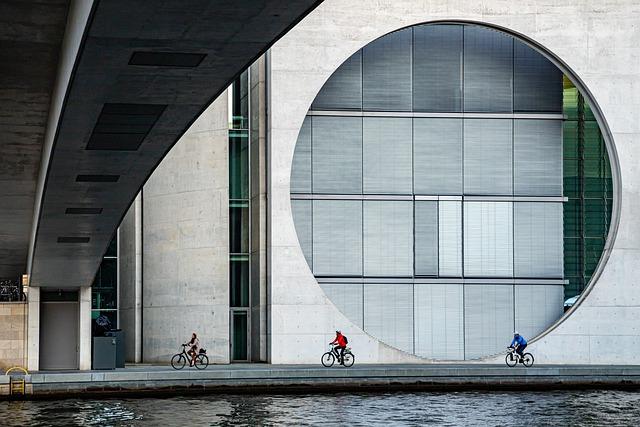
As cities across the globe grapple with increasing traffic congestion and growing demand for sustainable transportation, the debate over bike lanes and their impact on traffic flow has taken center stage. Advocates argue that dedicated bike lanes promote safety, reduce vehicle emissions, and encourage healthier lifestyles, while critics contend that these lanes can exacerbate traffic delays and limit roadway space for motorists.This contentious discussion highlights the complex balance urban planners must strike between accommodating cyclists and managing vehicular traffic in an era where every inch of road counts.
Table of Contents
- The Rise of Bike Lanes and Urban Mobility Challenges
- Analyzing Traffic Flow Data: Do Bike Lanes Cause Congestion
- Community Perspectives on Safety and Accessibility
- Policy Recommendations for Balancing Traffic Efficiency and Cyclist Protection
- Closing Remarks
The Rise of Bike Lanes and Urban Mobility Challenges
As cities around the globe prioritize sustainable transportation, the proliferation of bike lanes has sparked an intense dialog about urban mobility. Advocates argue that dedicated bike lanes are vital for reducing carbon emissions,improving public health,and providing equitable transportation options. However, critics highlight the unintended consequences these lanes may have on vehicular traffic flow, especially in congested urban centers. The challenge lies in balancing infrastructure improvements for cyclists with the established patterns of car commuters, often leading to heated disputes over road space allocation and parking availability.
Key concerns include:
- Potential increase in rush-hour congestion due to reduced car lanes
- Impact on local businesses losing curbside parking spaces
- Safety for both cyclists and motorists amid changing traffic dynamics
- Long-term benefits of active transit versus short-term traffic delays
Despite these challenges, many urban planners emphasize that integrating bike lanes is a step toward a more resilient and environmentally conscious cityscape, requiring innovative traffic management and community engagement to address mobility concerns effectively.
Analyzing Traffic Flow Data: Do Bike Lanes Cause Congestion
Recent studies analyzing urban traffic dynamics reveal that the introduction of bike lanes does not uniformly translate to increased congestion. In many cases, traffic flow stabilizes or even improves as cyclists shift from vehicular lanes, reducing overall vehicle density. Data collected from cities with newly installed protected lanes show varied outcomes depending on street design and existing traffic volume. Crucially, intersections and signal timings often play a more decisive role in congestion patterns than the mere presence of bike lanes themselves.
Key findings from traffic flow data include:
- Increased use of alternate modes of transportation, leading to a reduction in car trips.
- Enhanced safety features that promote steady movement rather than abrupt stops.
- Reconfiguration of lane widths to balance the needs of all road users effectively.
These factors suggest that bike lanes, when thoughtfully designed and integrated, can be part of a broader strategy to optimize urban mobility without exacerbating congestion concerns.
Community Perspectives on Safety and Accessibility
Community members remain sharply divided over the safety and accessibility of bike lanes, reflecting broader concerns about urban mobility. Advocates argue that dedicated bike lanes enhance rider safety by providing clear, separated paths that reduce conflicts with motor vehicles. They highlight improvements in accessibility for people of all ages and abilities, noting that protected lanes encourage more diverse groups, including children and older adults, to use bicycles as reliable transportation. These voices emphasize that well-designed bike lanes contribute to safer, more inclusive streetscapes, making cycling a viable option without compromising pedestrian space or vehicular traffic.
Conversely, critics express worries that bike lanes may impede traffic flow and create new hazards by forcing abrupt lane changes and reducing road space for drivers. Some residents claim that the removal of parking spots and narrowed travel lanes cause congestion, particularly during rush hours. The debate also touches on equity: detractors question whether bike lane investments prioritize certain neighborhoods over others, perhaps limiting access for motorists and local businesses. The community conversations reveal a complex balancing act, with repeated calls for data-driven planning and improved communication between city officials and residents to ensure bike infrastructure meets diverse needs without sacrificing overall traffic efficiency.
Policy Recommendations for Balancing Traffic Efficiency and Cyclist Protection
To address the ongoing tension between traffic flow and cyclist safety, policymakers must adopt a multifaceted approach that prioritizes evidence-based design and community-specific needs. Effective measures include integrating protected bike lanes that physically separate cyclists from vehicles to reduce collision risks without severely disrupting car traffic. In addition,optimizing traffic signal timing and introducing flexible lane usage during peak hours can maintain vehicle throughput while safeguarding vulnerable road users.
Moreover, cities should implement education campaigns targeted at both drivers and cyclists to foster mutual respect and awareness. Long-term strategies could involve:
- Incentivizing option transport modes such as e-bikes and shared mobility options to reduce road congestion.
- Investing in smart infrastructure that dynamically balances traffic demands with active transportation.
- Engaging local communities in the planning process to tailor solutions that reflect neighborhood-specific traffic dynamics.
This balanced policy framework is essential for creating safer, more efficient urban streets that accommodate diverse mobility needs without compromising flow or safety.
Closing Remarks
As cities continue to weigh the benefits and drawbacks of expanding bike lanes, the debate over their impact on traffic flow remains a complex and evolving issue. While proponents argue that bike lanes promote safer,greener,and more efficient urban travel,critics worry about potential congestion and its effect on commuting times. Moving forward, balanced urban planning that considers the needs of motorists, cyclists, and pedestrians alike will be essential to finding solutions that accommodate diverse transportation modes without compromising overall traffic efficiency. The road ahead,much like the lanes themselves,calls for thoughtful navigation and collaborative dialogue.