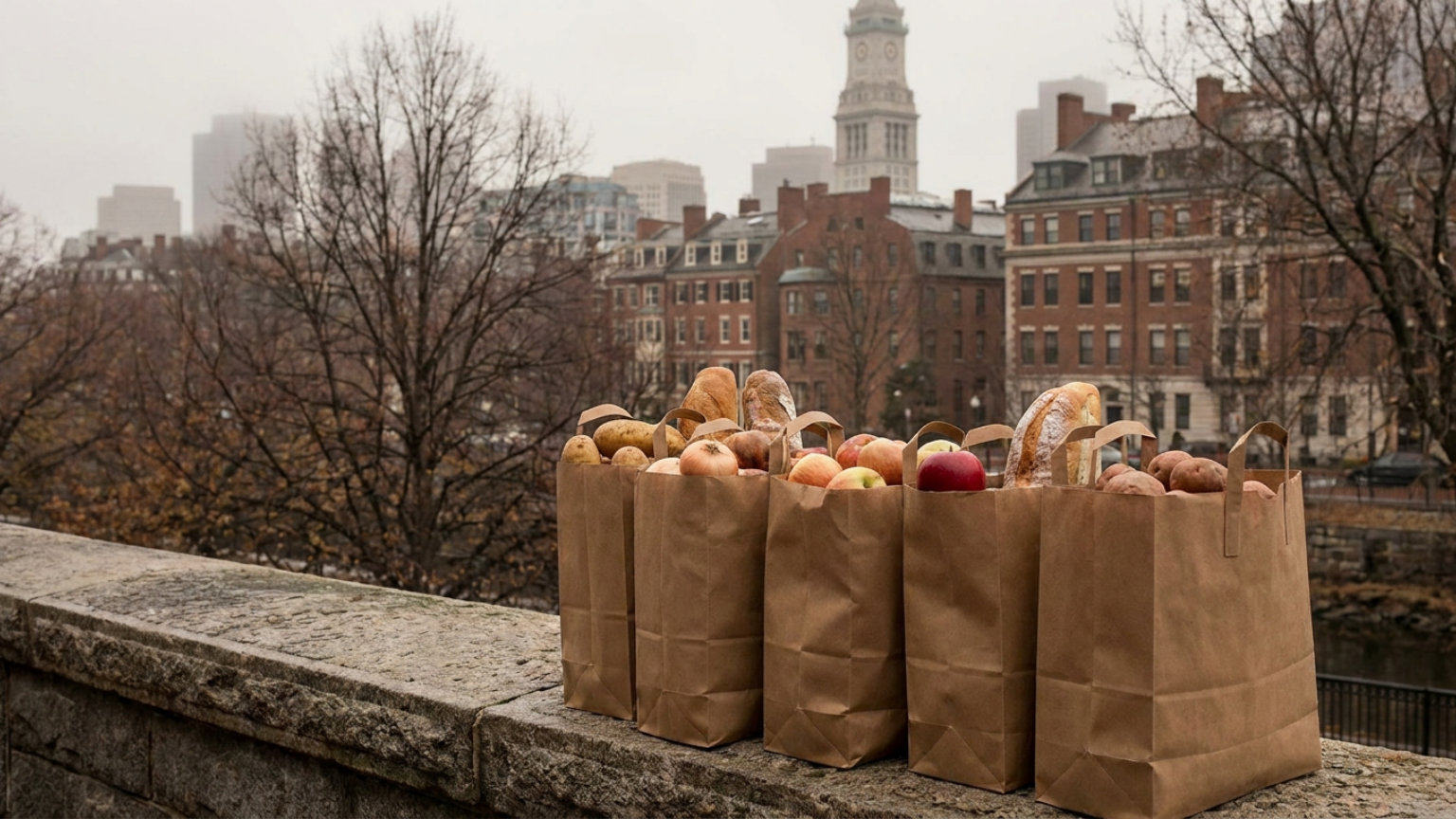
Roughly 45% of families across Greater Boston face food insecurity, according to an estimate Marty Martinez shared with NBC Boston, putting access to food at the center of the United Way leader’s message as the holiday season begins.
Martinez, who leads the Massachusetts Bay branch of United Way as its chief executive, also pointed to federal policy changes affecting eligibility for assistance. In the NBC Boston report published Nov. 20, he identified food needs as a particular concern during the holidays.
His comments brought together two issues: the extent of food insecurity he described in Greater Boston and changes to the rules governing access to federal programs. The Supplemental Nutrition Assistance Program, known as SNAP, was among the forms of assistance identified in the report as affected by eligibility changes.
Martinez placed those federal changes within the preceding one to two years. The available report did not specify which eligibility provisions had changed, when individual changes took effect or how many Greater Boston households had been affected.
A regional estimate, with limited detail
The figure Martinez cited amounts to nearly half of the region’s families. It was presented as a Greater Boston estimate, rather than a number limited to Boston itself or a statewide measure for Massachusetts.
The available source material does not identify the research behind that estimate, its measurement period or the geographic boundaries used for Greater Boston. It also does not provide a town-by-town breakdown or a comparison with earlier years. The percentage therefore remains an estimate attributed to Martinez, without additional methodological detail in the report.
Nor does the report establish how much of the food insecurity Martinez described resulted from federal eligibility changes. His remarks highlighted both concerns, but the available material does not quantify a relationship between them.
Eligibility and the federal debate
NBC Boston also noted that the Trump administration frequently raises concerns about fraud when discussing assistance programs. That federal emphasis appeared alongside Martinez’s account of food needs and changing eligibility, placing his regional concerns within a broader debate over benefits.
The available report does not provide a fraud estimate or evidence connecting fraud to the Greater Boston food insecurity figure. Those subjects should not be treated as interchangeable: Martinez’s estimate concerned families facing food insecurity, while the administration’s stated concern addressed fraud.
For Greater Boston, the central point of Martinez’s holiday-season remarks was the scale of need he described. His comments drew attention to food access at a time when United Way is giving that issue added emphasis, while also flagging changes in access to federal support. The source material offers no specific local participation figures for SNAP, leaving the regional effects of those eligibility changes unquantified.