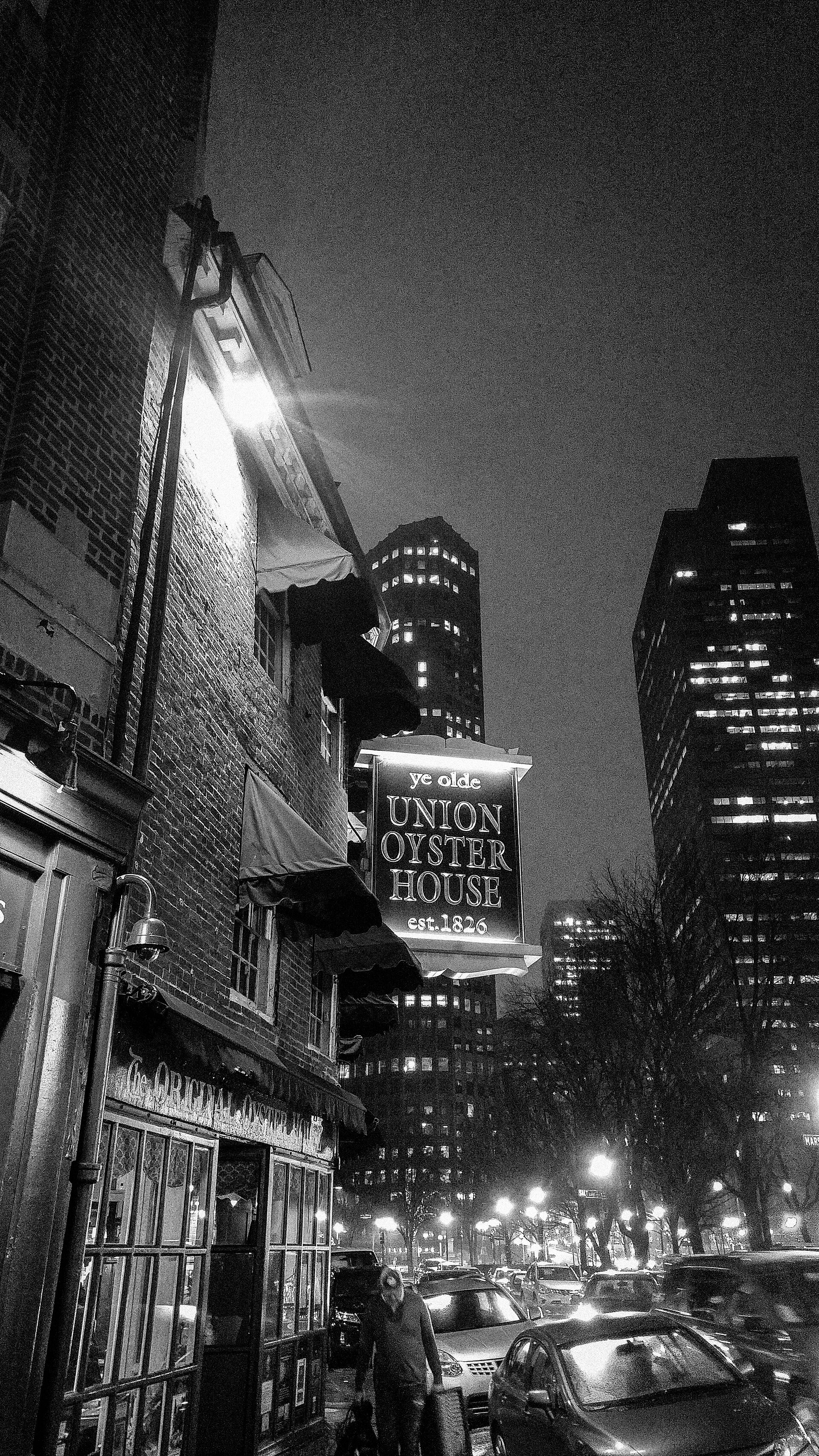
BOSTON — Union Oyster House reaches its bicentennial in 2026, marking 200 years since a former dry goods shop began serving diners on Union Street. The restaurant at 41 Union St., near Faneuil Hall, still uses an oyster bar installed when the business opened in 1826.
The milestone puts the restaurant among the country’s longest-running dining establishments. Union Oyster House describes itself as the nation’s oldest continuously operating restaurant; the American Battlefield Trust more broadly identifies it as one of the oldest. Its status as a National Historic Landmark dates to May 27, 2003, according to a National Park Service record verified by Boston Weekly.
Located along the Freedom Trail, the restaurant occupies an early 18th-century building near Marshall Street. Its history encompasses a merchant’s shop, a Revolutionary-era newspaper operation and lodging for a French prince before oysters became its defining business.
A shop becomes an oyster house
Hawes Atwood and Allen Holbrook Bacon opened the restaurant in 1826 in space previously occupied by Hopestill Capen’s silk and dry goods business, according to the American Battlefield Trust. The establishment traded under several versions of its founders’ names during its first century before adopting the Union Oyster House name in the early 1900s.
The curved oak oyster bar near the entrance was part of that original restaurant. The trust describes it as the only known surviving example of its type in the country and says it remains in use for the same purpose as when it was installed.
The business emerged from an established New England dining tradition. As oysters gained popularity in the late 1700s, oyster houses became gathering spots where customers discussed politics and other issues over food and drinks, serving a social function similar to taverns and coffeehouses, according to the trust. Oysters were offered in preparations that included raw and roasted.
History above the dining rooms
The building’s connection to public debate predates the restaurant. From 1771 through 1775, printer Isaiah Thomas produced The Massachusetts Spy on its second floor, according to the trust. Capen’s retail business occupied the ground floor before its conversion to dining space.
Later, the upstairs rooms housed Louis Philippe, the exiled French prince who would become king. The restaurant’s history dates his stay to 1796 and says he supported himself by teaching French. The trust also documents his lodging there in the late 1790s.
Among the restaurant’s well-known patrons was Sen. Daniel Webster, whose visits to the oyster bar appear in both historical accounts. Both describe him ordering multiple plates of oysters accompanied by brandy and water.
President John F. Kennedy also patronized the restaurant. According to its own history, he favored the privacy of an upstairs dining room. A booth dedicated to him remains part of the restaurant’s historical identity, a detail also documented by the trust.
The restaurant’s account names Joseph A. Milano Jr. and Mary Ann Milano Picardi as carrying on the business since 1970. Its two-century history now spans generations of ownership, while the original oyster bar continues to connect the present-day dining operation with its beginnings in 1826.