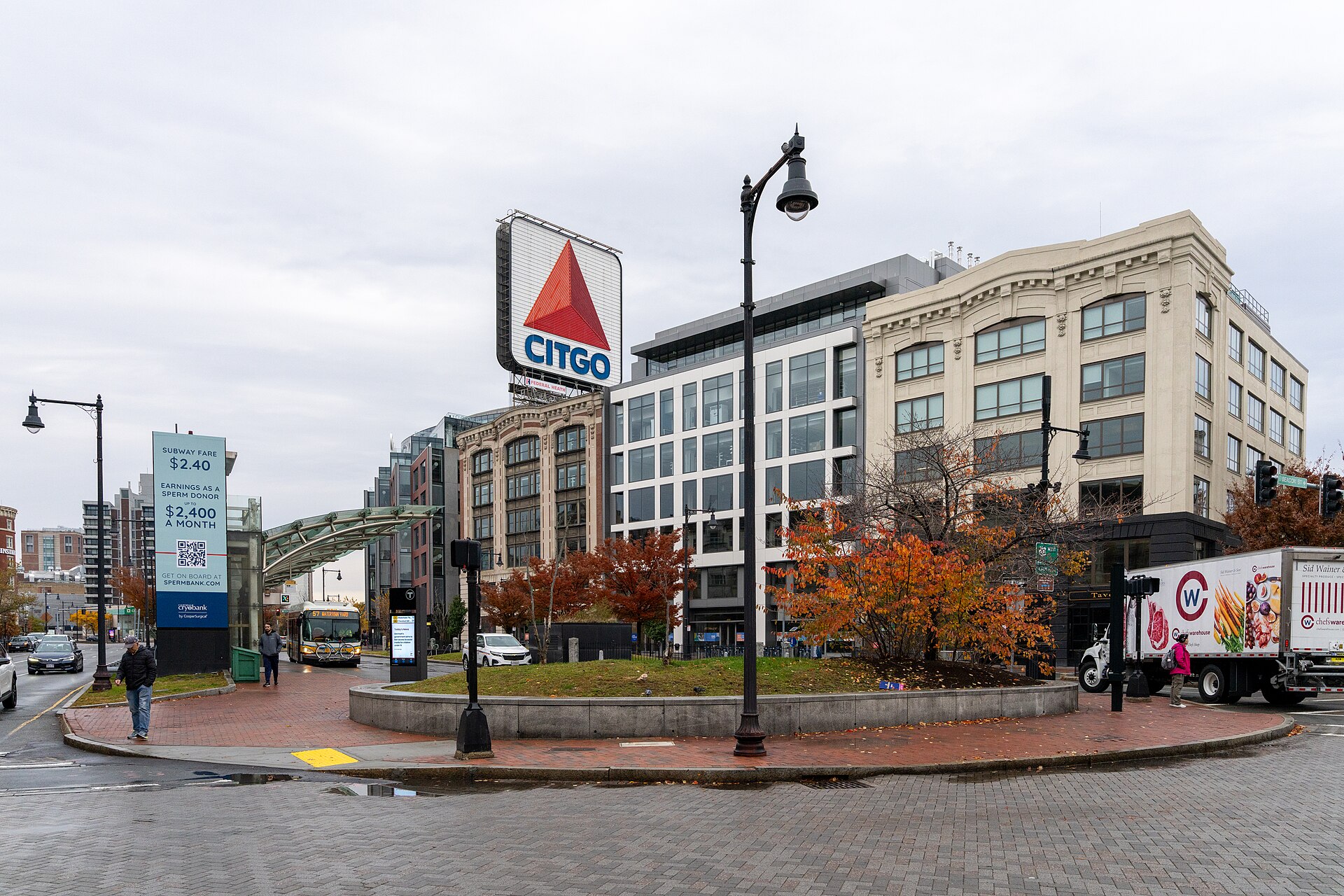
The Citgo sign above Kenmore Square began as an oil company’s advertisement, but its place in Boston’s skyline has depended on more than commercial visibility. Baseball broadcasts made it nationally recognizable, and preservation campaigns helped keep it standing when its future was uncertain.
The two-sided sign measures 60 feet on each side and is visible from Cambridge across the Charles River. Its familiar triangle arrived in 1965, replacing an earlier design installed in 1940. Over the decades, the billboard became closely associated with Fenway Park, even as its connection to a gas station below disappeared.
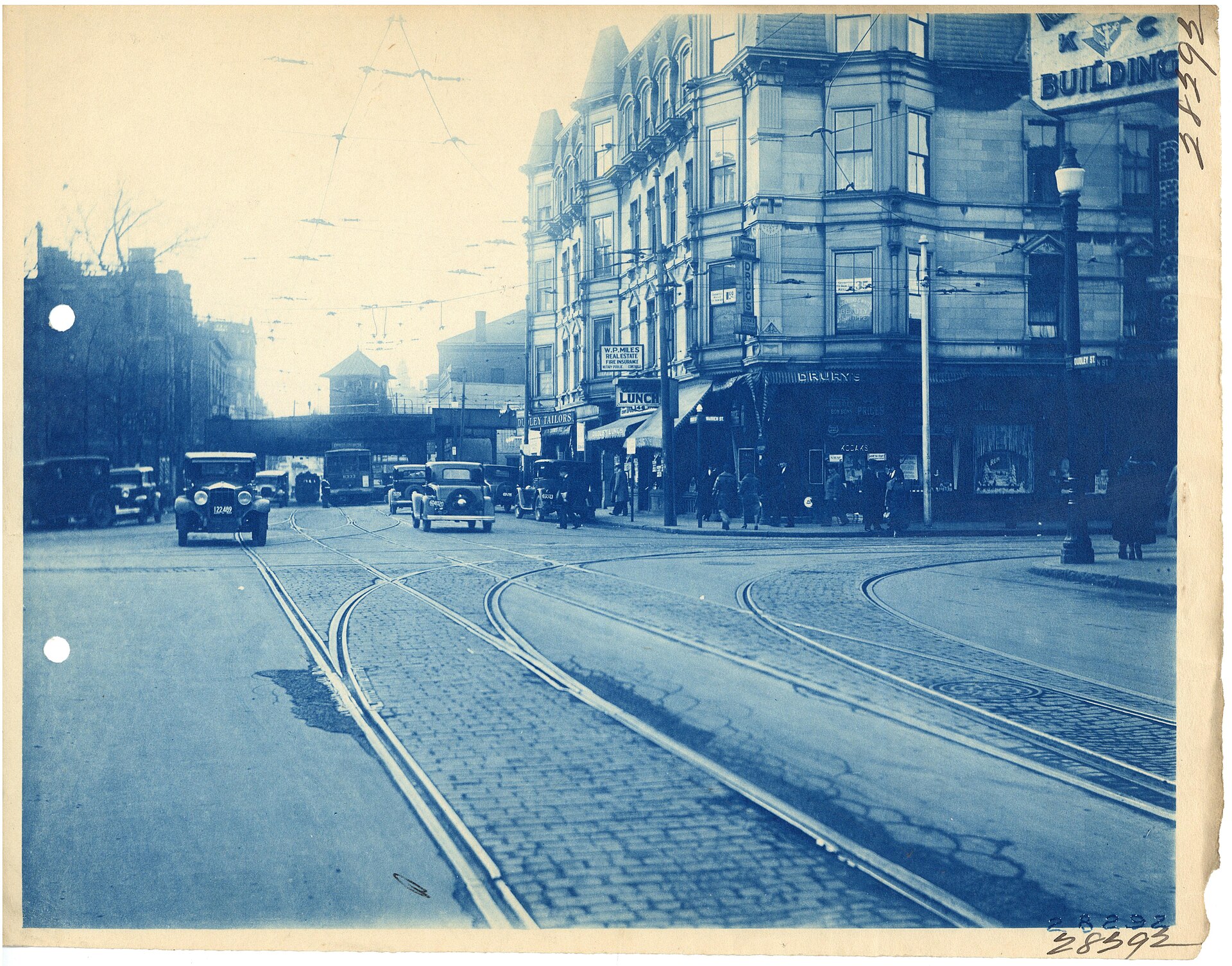
That transformation unfolded at one of Boston’s major crossroads. Beacon Street and Brookline Avenue meet Commonwealth Avenue at Kenmore Square, with Fenway nearby to the south and a subway station beneath the intersection.
From roadside advertising to baseball backdrop
The square itself had recently acquired its modern name when the first sign went up. Previously called Governor Square, it became Kenmore Square in 1931. The underground transit station opened the following year, moving streetcars beneath the busy crossing.
In 1940, the C.I. Brink Sign Company built a billboard displaying the green-and-white Cities Service trefoil. A Cities Service station originally occupied the building’s ground floor. Other oil businesses, including Gulf and Socony Mobil, also erected prominent signs near Fenway during that decade, but their displays did not endure as this one did.
The Citgo triangle replaced the trefoil in 1965. Seen beyond Fenway’s Green Monster during televised Red Sox games, the sign developed an identity intertwined with the ballpark. Its baseball association extended beyond Boston: replicas have appeared at minor league parks in Portland, Maine, and Corpus Christi, Texas.
A darkened sign draws defenders
Familiarity did not guarantee the sign’s survival. In 1979, Gov. Edward J. King directed that its lights be switched off as an energy-conservation gesture. Four years later, Citgo moved to dismantle the deteriorating structure.
The removal effort prompted public opposition. The Boston Landmarks Commission delayed dismantling while the dispute was considered, and preservationist Arthur J. Krim helped lead the campaign to retain it. Citgo restored the sign and illuminated it again in 1983, drawing about 1,000 supporters.
Later work changed how the billboard glowed. A six-month restoration culminated in March 2005 with LEDs replacing neon. The older system had used 5,878 glass tubes stretching more than five miles in total. Another lighting replacement began in July 2010, intended to improve resistance to harsh temperatures and wind.
Preservation amid redevelopment
Ownership changes brought another round of uncertainty. Related Beal acquired the sign’s building in 2016 as part of a nine-building purchase totaling $140 million. Boston University had previously owned it.
In November 2018, the landmarks commission unanimously backed formal landmark designation. Mayor Marty Walsh subsequently vetoed that decision as Citgo and Beal reached a lease agreement allowing the billboard to stay for 30 more years. Its popular standing as a landmark was therefore distinct from its official preservation status.
The relationship between the sign and the changing skyline remained an issue. In October 2025, Boston approved a relocation plan placing it 30 feet higher and 130 feet farther east to preserve its visibility amid high-rise development in Kenmore Square.