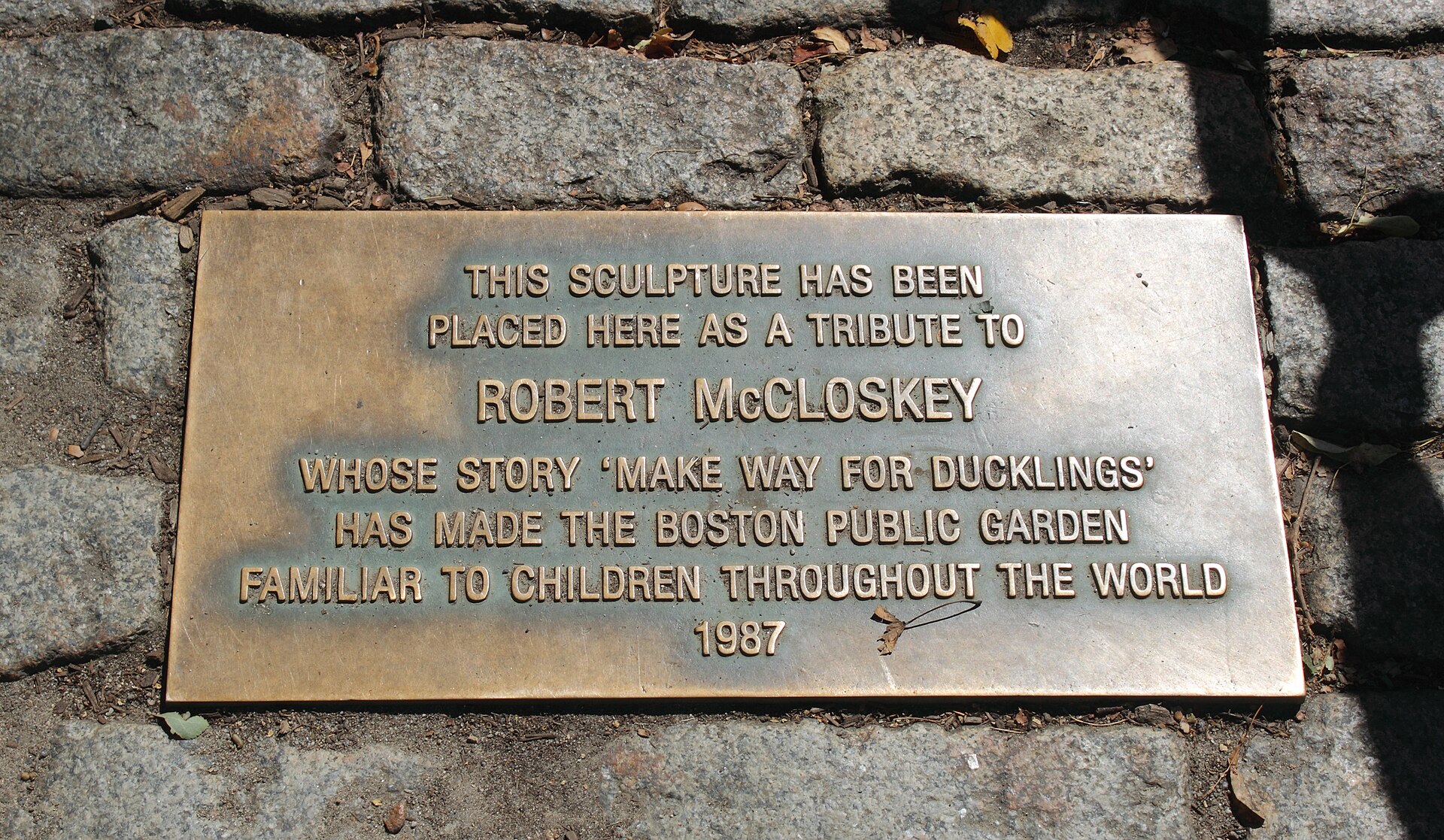
Boston’s Public Garden is both the destination for the feathered family in Robert McCloskey’s Make Way for Ducklings and the home of its bronze counterparts. Installed in 1987, Nancy Schön’s sculpture of Mrs. Mallard with her eight young ducks brought the characters from the 1941 picture book into the landscape that helped inspire it.
The connection extends beyond the park. McCloskey’s book received the Caldecott Medal in 1942 and became Massachusetts’ official children’s book in 2003. The sculptures draw visitors who photograph the family and children who climb on the bronze figures, giving the literary story a physical presence in Boston.
McCloskey’s familiarity with the city began during his art education. He came to Boston on a scholarship in 1932 and attended Vesper George Art School through 1936. During those years, he visited the Public Garden and fed its ducks — experiences that later contributed to the book.
He continued his training at New York’s National Academy of Design. A subsequent return to Boston for a mural project yielded an early draft of the duck story. His preparation for the illustrations included studying at the American Museum of Natural History, consulting an ornithologist and taking six ducklings home to observe.
A family’s route through Boston
Published by Viking Press, Make Way for Ducklings was McCloskey’s second book. Its story follows two mallards searching for a suitable place to nest, with Boston’s streets, waterways and landmarks shaping their decisions.
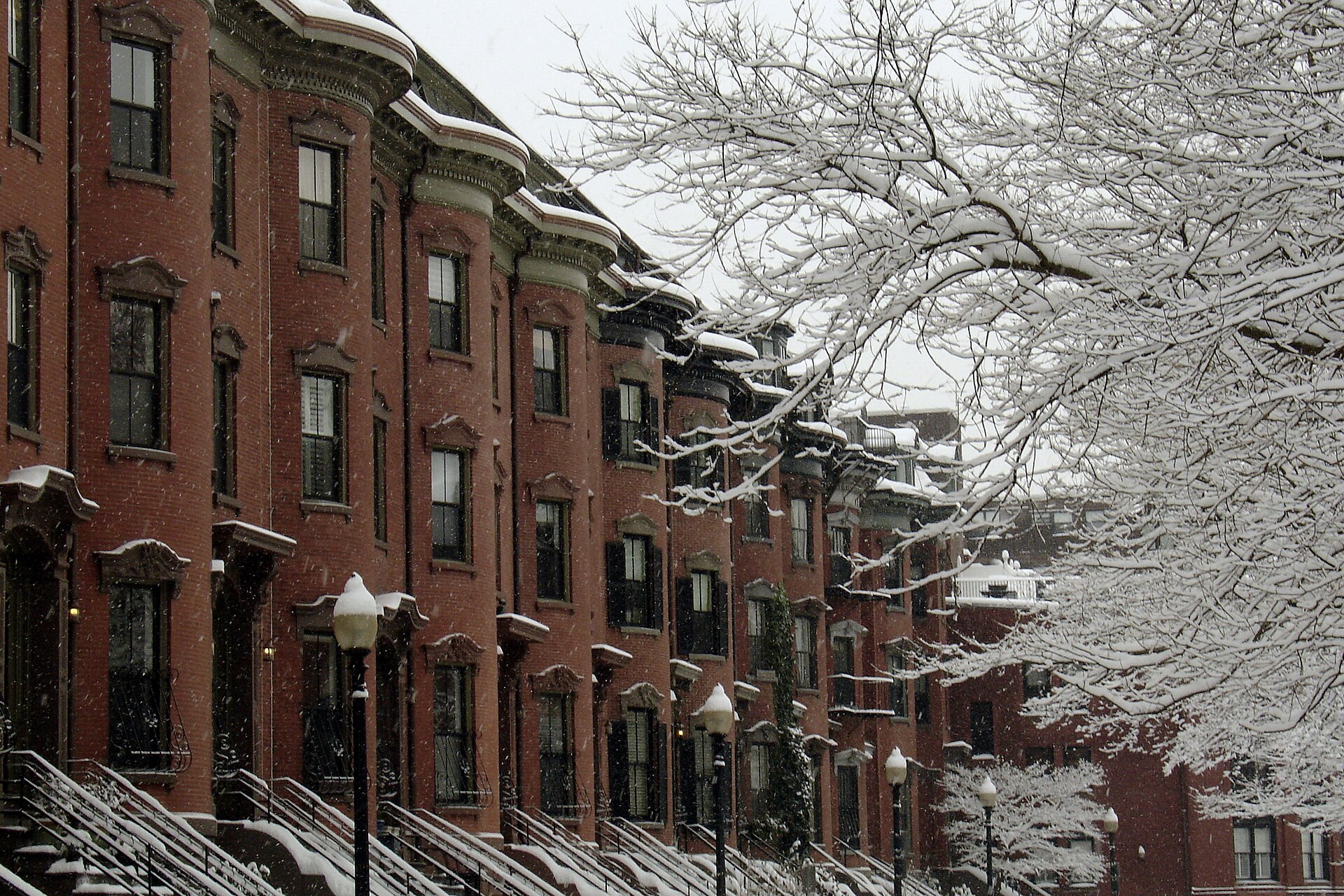
The Public Garden initially seems promising. The ducks encounter a swan boat and eat peanuts tossed by its passengers. But a close call with a bicycle sends them looking elsewhere. Their search takes them over Beacon Hill, the State House and Louisburg Square before they choose a Charles River island.
There, Mrs. Mallard hatches eight ducklings and teaches them to swim, dive and follow her. When she later leads them toward the Garden to reunite with Mr. Mallard, traffic blocks their progress. A police officer who has been feeding the ducks helps them cross and calls for assistance along their route.
The journey takes the family along Mount Vernon and Charles streets and across Beacon Street into the Garden. McCloskey’s illustrations place the ducks within recognizable city surroundings, often presenting the scene from the young birds’ perspective. He made the artwork in charcoal before it was reproduced through lithography in sepia tones.
From illustrations to bronze
Schön’s sculpture stands beside a Garden path, with the pond on one side and the street on the other. Its nine figures commemorate the mother and ducklings rather than the entire fictional family. The park also hosts an annual Mother’s Day parade inspired by the book, with children wearing character costumes.
The sculpture’s reach eventually extended beyond Boston. A second version was installed in Moscow in 1991. Meanwhile, the book remained continuously in print, with sales exceeding 2 million copies by 2003. Its Public Garden setting endures in two forms: the illustrated refuge at the end of the ducklings’ journey and the actual park where visitors encounter their bronze likenesses.