
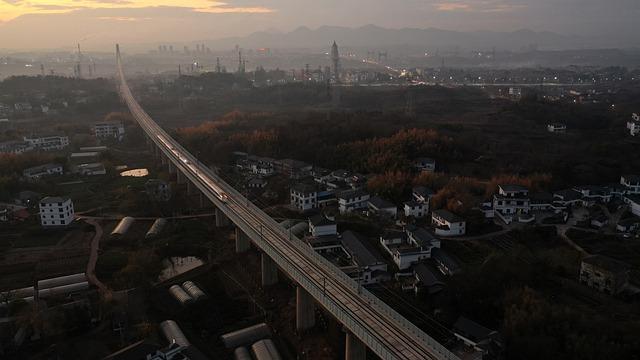
As high-speed rail projects advance across the nation, their transformative impact on connecting distinct regions becomes increasingly evident. In Massachusetts, plans and initiatives to link Western and Eastern parts of the state through high-speed rail promise to enhance regional connectivity, stimulate economic growth, and offer a sustainable transportation alternative. This development aims to reduce travel times, ease congestion on highways, and expand access to jobs and education, fostering a more integrated and accessible state. The ongoing implementation of these rail systems marks a meaningful step toward modernizing transit infrastructure and addressing environmental concerns in Massachusetts and beyond.
Table of Contents
- High-Speed Rail Transforming Commute Between Western and Eastern Massachusetts
- Economic Opportunities Arising from Enhanced Regional Connectivity
- Addressing Infrastructure Challenges for Seamless High-Speed Rail Integration
- Policy Recommendations to Maximize Benefits of High-Speed Rail Expansion
- Wrapping Up
High-Speed Rail Transforming Commute Between Western and Eastern Massachusetts
The introduction of high-speed rail between Western and Eastern Massachusetts is set to revolutionize daily travel,slashing commute times and enhancing regional connectivity. This transformative infrastructure enables residents and businesses to bridge the geographic divide with unprecedented efficiency, supporting economic growth and fostering stronger community ties. Key urban centers such as Springfield, Worcester, and Boston will become more accessible, promoting greater workforce mobility and stimulating local economies along the corridor.
Significant benefits brought by this high-speed rail initiative include:
- Reduction of travel time by up to 50%, enabling quicker access to employment, education, and cultural hubs.
- Decreased road congestion and environmental impact by offering a sustainable alternative to car and bus travel.
- Creation of new job opportunities during construction and ongoing rail operations.
- Enhanced real estate value and business investment potential in areas surrounding the new stations.
As this rail system gains momentum,it is expected to redefine the region’s transportation landscape,contributing to a more connected and resilient Massachusetts.
Economic Opportunities Arising from Enhanced Regional Connectivity
Enhanced connectivity between Western and Eastern Massachusetts through high-speed rail is catalyzing a transformative wave of economic prospects. By drastically reducing travel times, the rail line enables businesses to tap into a broader labor pool and streamline supply chains across regions. Local economies are poised to benefit from a surge in investment, as improved accessibility attracts startups, tech firms, and manufacturing hubs looking to capitalize on diversified markets. Furthermore, property values near rail stations are experiencing upward trends, signaling renewed interest in urban and suburban real estate development.
Key economic impacts are emerging in various sectors, including:
- Job creation: Construction and ongoing rail operations are generating thousands of new jobs, while linked industries anticipate expansion.
- Tourism and retail growth: Easier travel encourages daily commuting for work and leisure, boosting sales in hospitality and local merchants.
- Innovation hubs: Enhanced access fosters collaboration among universities, research centers, and entrepreneurs across the state.
Addressing Infrastructure Challenges for Seamless High-Speed Rail Integration
Developing a high-speed rail network to efficiently bridge the Western and Eastern United States demands overcoming a series of critical infrastructure challenges. Unlike traditional rail, these systems require ultra-straight, ultra-smooth tracks to safely sustain speeds in excess of 200 mph. This necessitates continuously welded rails, precise alignment tolerances, and a rock-solid foundation engineered to endure the immense dynamic forces generated at high velocity. Moreover, integrating such advanced track systems within existing urban and rural landscapes involves complex coordination to minimize disruption and ensure connectivity across diverse terrains.
Beyond the engineering rigors, the successful fusion of high-speed rail hinges on extensive planning and multi-sector collaboration. Key considerations include:
- Optimized station locations to maximize accessibility and transit interchanges
- Robust signaling and interaction systems to enhance safety and operational efficiency
- Strategic investment partnerships across federal, state, and private stakeholders to secure sustained funding
- Environmental assessments that mitigate the ecological footprint while promoting sustainable transit solutions
Only by meticulously addressing these multidimensional infrastructure aspects can the vision of a seamless high-speed corridor connecting America’s coasts become a transformative reality.
Policy Recommendations to Maximize Benefits of High-Speed Rail Expansion
To fully harness the transformative potential of high-speed rail connecting Western and Eastern Massachusetts, policymakers must prioritize integrated transport networks that complement rail infrastructure. This includes investments in seamless last-mile connectivity such as expanded bus services, improved pedestrian pathways, and bike-sharing programs. Establishing coordinated fare systems and synchronized schedules will enhance commuter convenience, foster ridership growth, and reduce reliance on personal vehicles. Moreover, adopting zoning reforms to encourage higher-density, transit-oriented development around station hubs can stimulate economic revitalization and equitable growth in underserved communities.
Equally critical is the emphasis on sustainable funding models and ongoing community engagement to ensure resilience and inclusivity. Policy frameworks should incentivize public-private partnerships to secure long-term financing and foster innovation in rail technology and operations.Transparent dialog with local stakeholders will address concerns and promote shared ownership of the project’s success. Key recommendations include:
- Implementing robust environmental impact assessments to minimize ecological disruption
- Prioritizing workforce development initiatives, ensuring local job creation and skills training
- Enhancing accessibility standards to serve all passengers, including those with disabilities
- Setting clear metrics to evaluate social and economic benefits over time
Wrapping Up
As Western and Eastern Massachusetts move closer together through the promise of high-speed rail, the transformative potential of this project cannot be overstated. Beyond reducing travel times, it stands to reshape economic opportunities, enhance regional connectivity, and foster sustainable growth across the Commonwealth. While challenges remain, the rail initiative represents a pivotal step toward bridging geographical divides and uniting communities-ushering in a new era of mobility and collaboration for Massachusetts.