
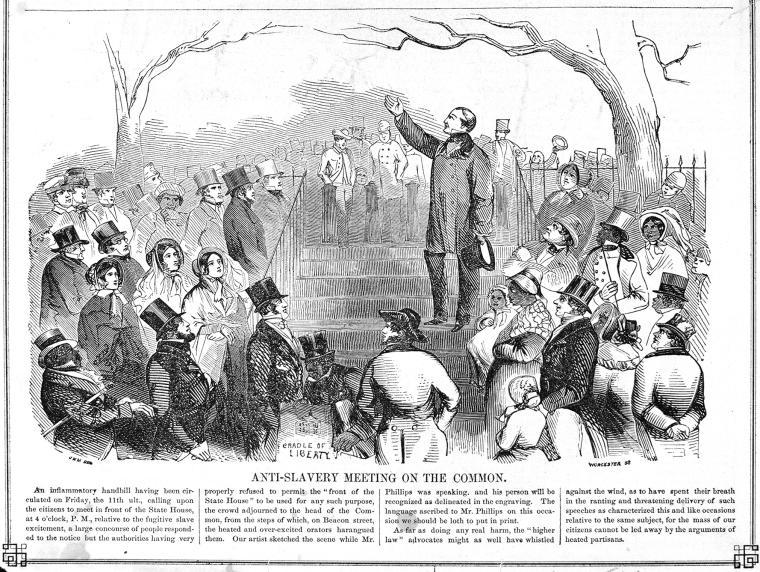
Boston, a city renowned for its revolutionary spirit and rich ancient tapestry, played a pivotal role in the abolitionist movement of the 19th century. At the forefront of this crusade was William Lloyd Garrison, whose leadership and unwavering commitment to ending slavery helped galvanize the city as a center of anti-slavery activism. This article explores Boston’s critical influence on abolition, shedding light on Garrison’s contributions and the broader community efforts that shaped a defining chapter in the nation’s fight for freedom and equality.
Table of Contents
- Boston as the Crucible of Abolitionist Thought and Activism
- William Lloyd Garrison’s Leadership and Radical Vision for Emancipation
- Key Boston-Based Initiatives That Amplified the Anti-Slavery Movement
- Strategic Recommendations for Preserving and Promoting Boston’s Abolitionist Legacy
- Final Thoughts
Boston as the Crucible of Abolitionist Thought and Activism
Boston emerged in the 19th century as a pivotal arena for abolitionist advocacy, fueled by a fervent commitment to human rights and justice.The city’s historical streets witnessed impassioned debates and brave actions spearheaded by William Lloyd Garrison, whose unyielding voice resonated through his groundbreaking publication, The Liberator. Boston became more than a mere backdrop; it was a dynamic staging ground where abolitionists organized meetings, rallied supporters, and challenged prevailing societal norms.
Key elements of Boston’s abolitionist landscape included:
- Active underground networks assisting escaped enslaved people reaching freedom via the city’s robust abolitionist community.
- Prominent abolitionist societies and churches serving as hubs for awareness and activism.
- Public forums and frequent lectures that stirred public opinion and mobilized civic engagement against slavery.
Garrison’s leadership was instrumental in shaping Boston into the crucible where abolitionist thought matured and ignited broader reform movements, leaving an indelible mark on American history.
William Lloyd Garrison’s Leadership and Radical Vision for Emancipation
William Lloyd Garrison emerged as a formidable force in the abolitionist movement through his uncompromising advocacy for immediate emancipation. Based in Boston, his radical stance challenged both societal norms and political complacency, positioning him as a beacon of moral clarity amid growing national division. Garrison’s founding of the abolitionist newspaper The Liberator in 1831 became a pivotal platform for disseminating his fiery rhetoric and galvanizing supporters. His leadership was characterized by an unwavering commitment to the full and immediate freedom of enslaved individuals, setting a new standard that many contemporaries considered too extreme.
Garrison’s influence extended beyond print; his activism included organizing conventions, delivering impassioned speeches, and fostering a network of allies dedicated to justice and equality. His radical vision was marked by:
- Unflinching advocacy for non-violent resistance and moral suasion
- Rejection of gradual emancipation and compromise with pro-slavery factions
- Focus on the inherent dignity and rights of African Americans
Garrison’s leadership ignited profound debates and helped shift the abolitionist movement towards a more urgent and principled call for freedom, cementing Boston’s reputation as a crucible for transformative social change.
Key Boston-Based Initiatives That Amplified the Anti-Slavery Movement
Boston emerged as a pivotal hub for abolitionist activity, driven by a network of activists and organizations dedicated to dismantling slavery. One of the defining initiatives was the establishment of the New England Anti-Slavery Society in 1831, co-founded by William Lloyd Garrison. Boston’s abolitionists used this platform to mobilize public opinion and deliver scathing critiques of slavery through literature, speeches, and public demonstrations. The city also hosted numerous abolitionist meetings and conventions that galvanized local and national support, positioning Boston as a beacon of anti-slavery fervor. Key abolitionist newspapers and pamphlets, including Garrison’s own “The Liberator,” were produced in Boston, spreading powerful messages that reached audiences well beyond the city limits.
Strategically, Boston’s abolitionists employed innovative methods to amplify their cause. They engaged in grassroots activism that included:
- Organizing anti-slavery lecture circuits that attracted influential speakers and converted skeptics
- Supporting the Underground Railroad with safe houses and networks within the city
- Lobbying local politicians to enact anti-slavery legislation and resist federal pro-slavery laws
- Collaborating with other reform movements, such as women’s rights advocates, to broaden the movement’s impact
Through these initiatives, Boston did not merely support abolition; it became a relentless engine powering the movement forward under Garrison’s uncompromising leadership and moral clarity.
Strategic Recommendations for Preserving and Promoting Boston’s Abolitionist Legacy
To ensure Boston’s pivotal role in the abolitionist movement remains vivid and instructive for future generations, a multifaceted approach is essential. First, local authorities and cultural organizations should collaborate on restoring and maintaining key historical sites associated with William Lloyd Garrison and other abolitionist figures. Establishing immersive interpretive centers and integrating augmented reality experiences can bring Garrison’s uncompromising activism to life, fostering deeper public engagement.Additionally, curricula in Boston schools must embed abolitionist history prominently, highlighting Garrison’s fearless journalism and leadership to inspire critical thinking about justice and equality.
Promotional efforts should include sustained campaigns that elevate Boston’s abolitionist heritage within both national and global narratives. This can be achieved through:
- Annual symposiums and lectures featuring historians and activists focused on abolitionist studies
- Partnerships with media outlets to produce documentaries and digital content showcasing Boston’s leadership role
- Community-driven walking tours that connect abolitionist landmarks with contemporary social justice movements
By blending education, preservation, and innovative storytelling, Boston can revitalize Garrison’s legacy as a beacon of moral courage, ensuring it remains a catalyst for reflection and action well beyond its historical context.
Final Thoughts
Boston’s pivotal role in the abolitionist movement, especially through the leadership of William Lloyd Garrison, underscores the city’s enduring legacy as a beacon of social justice and reform. As a hub of abolitionist activity, Boston not only amplified the fight against slavery but also helped shape the broader American conscience during a critical era in history. Garrison’s unwavering commitment and the city’s vibrant activist community continue to inspire efforts toward equality and human rights today, reminding us that the pursuit of justice frequently enough begins with courageous voices and dedicated local efforts. For those interested in exploring Boston’s rich historical landscape further, the city remains a vibrant center for culture and history in New England[[1]](https://en.wikivoyage.org/wiki/Boston)[[2]](https://en.wikipedia.org/wiki/Boston)[[3]](https://www.boston.gov/visiting-boston).