
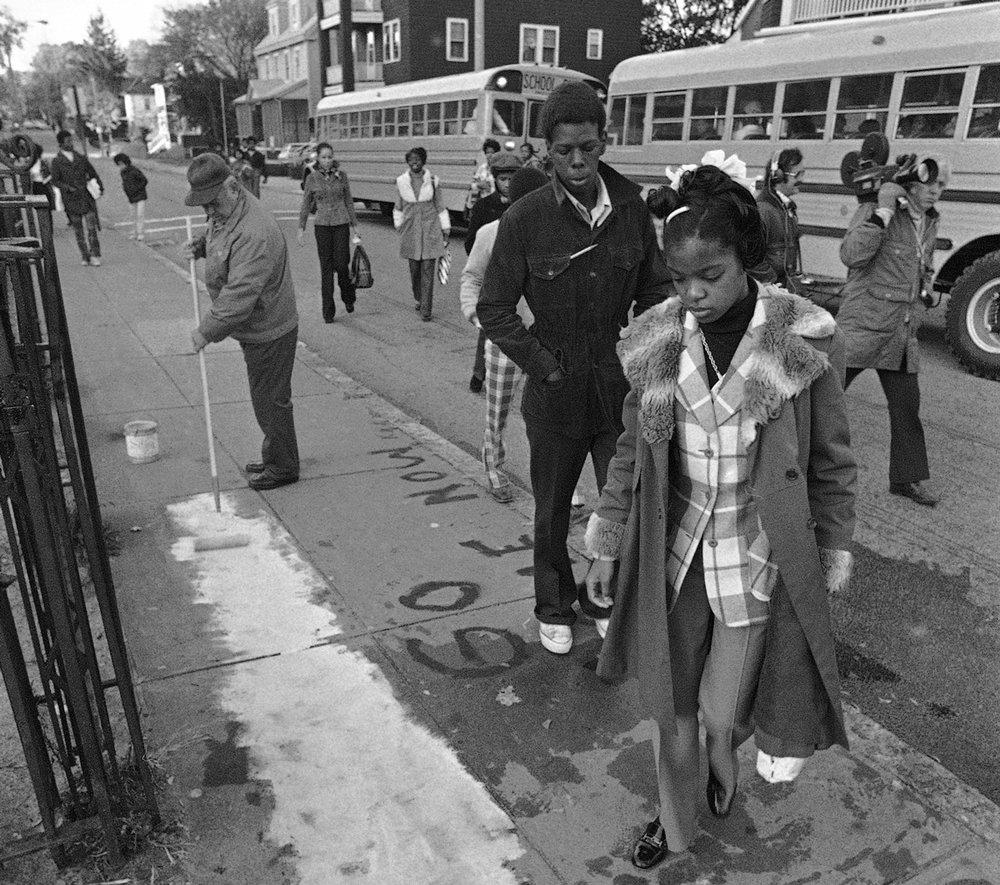
In the mid-1970s, Boston became the epicenter of one of the most contentious battles over civil rights and public education in American history. The forced busing plan implemented in 1974 aimed to desegregate the city’s public schools, igniting fierce protests, deep community divisions, and violent confrontations.What was heralded as a landmark step toward racial equality quickly devolved into a crisis that exposed the entrenched challenges of segregation in Northern cities. Decades later, Boston’s busing crisis remains a defining moment-a turning point that reshaped the city’s social landscape and left a lasting legacy on its educational system and race relations. This article delves into the complexities of this turbulent period, examining its causes, its impact on Boston’s communities, and the enduring lessons learned from this pivotal chapter in American history. [[1]](https://prismreports.org/2023/01/11/lasting-legacy-boston-busing-crisis/) [[2]](https://www.wbur.org/news/2014/09/05/boston-busing-anniversary) [[3]](https://guides.bpl.org/bpshistory/busing)
Table of Contents
- The Roots of Boston’s Busing Crisis and Its Impact on Communities
- How School Desegregation Efforts Sparked Widespread Resistance
- Analyzing the Long-Term Effects on Education and Race Relations
- Strategies for Healing Division and Promoting Inclusive Schools Today
- Closing Remarks
The Roots of Boston’s Busing Crisis and Its Impact on Communities
The origins of Boston’s busing crisis in the 1970s trace back to longstanding racial segregation within the city’s public school system. Despite the Supreme Court ruling in Brown v. Board of Education (1954) that declared state laws establishing racial segregation in public schools unconstitutional, Boston’s neighborhoods remained deeply divided along racial lines. The federal court’s 1974 decision to enforce desegregation through busing sought to address the systemic inequalities that African American students faced but ignited fierce resistance from many white communities. This friction highlighted the tangled interplay between race, class, and geography, challenging the notion that legal mandates alone could eliminate entrenched social disparities.
The impact of the busing crisis was profound and multifaceted, reshaping Boston’s social and educational landscape:
- Community Division: Schools became battlegrounds symbolizing broader racial tensions, leading to protests, boycotts, and incidents of violence.
- Demographic Shifts: White flight accelerated as many families relocated to suburbs, altering the city’s demographics permanently.
- Educational Outcomes: While aiming to promote integration and equal opportunity, busing also exposed disparities in resources and sparked debates over educational quality.
Ultimately, Boston’s busing crisis underscored the complexities of dismantling systemic racism and served as a pivotal chapter in the nation’s ongoing struggle for civil rights and equal education.
How School Desegregation Efforts Sparked Widespread Resistance
Boston’s introduction of mandatory busing in the early 1970s, designed to desegregate public schools, ignited fierce opposition across communities. Many white families viewed the policy as an intrusive federal mandate disrupting neighborhood schools and conventional social structures. The backlash was both immediate and intense, characterized by protests, school boycotts, and sometimes violent confrontations. This resistance was not confined to a single group but included parents, local politicians, and some law enforcement figures who challenged the desegregation efforts publicly and legally.
The turmoil surrounding busing revealed deep-seated racial tensions and fears about changing demographics and educational equity. Key characteristics of the opposition included:
- Community protests and organized resistance movements formed to oppose forced reassignment of students across racial lines.
- School closures and declining enrollment in affected neighborhoods as parents sought alternatives to busing.
- Political maneuvering by city officials attempting to balance federal court orders with local opposition.
This widespread defiance ultimately prolonged the struggle to achieve integrated education and highlighted the complexities of enforcing civil rights in a deeply divided society.
Analyzing the Long-Term Effects on Education and Race Relations
The busing crisis of the 1970s left an indelible mark on Boston’s educational landscape, reshaping policies and community dynamics for decades to follow. While the immediate goal was to achieve racial integration in schools, the long-term effects revealed a complex legacy. On one hand, educational access and diversity increased in certain districts, exposing students to a broader range of cultural experiences. Though, persistent disparities in resources and achievement gaps highlighted that structural inequalities were not easily erased by busing alone. Many neighborhoods saw demographic shifts as families relocated, which ironically intensified segregation in some areas rather than dissolving it.
When assessing race relations, the crisis became both a catalyst for dialog and a source of entrenched division. The unrest exposed deep-seated racial tensions that extended far beyond the classroom walls. While busing forced communities to confront uncomfortable truths about inequality and prejudice, it also galvanized activism and policy reform in subsequent generations. Key outcomes include:
- Heightened awareness of systemic racism in public institutions
- Formation of advocacy groups pushing for equitable education
- Incremental policy shifts emphasizing inclusion and diversity
Still, the busing episode remains a cautionary tale on how social engineering in education requires more than logistical solutions-it demands continual commitment to justice and community healing.
Strategies for Healing Division and Promoting Inclusive Schools Today
Addressing the deep-rooted divisions ignited during the busing crisis requires purposeful collaboration and community engagement. Schools today must prioritize open dialogue that welcomes diverse perspectives, fostering environments where students and educators alike feel seen and heard. Initiatives such as restorative justice programs and bias-awareness training can help dismantle lingering prejudices and promote mutual respect. Additionally, leveraging culturally relevant curricula empowers students by validating their identities and history, which is crucial for healing fractured communities.
Effective strategies also involve a commitment to structural equity and inclusive policies at every level of education. This means:
- Implementing equitable resource allocation to ensure all schools have access to quality facilities and experienced teachers
- Engaging families and local leaders in decision-making processes to rebuild trust and accountability
- Creating safe spaces that support mental health and foster resilience among students impacted by socio-political strife
Only through sustained efforts that address both policies and personal connections can schools move beyond division toward a truly inclusive future.
Closing Remarks
The 1970s busing crisis in Boston remains a defining chapter in the city’s history, reflecting the complexities of race, education, and community struggle. As Boston continues to evolve, the lessons from this turbulent era serve as a reminder of the challenges in pursuing equality and justice. Understanding this pivotal moment not only sheds light on the past but also informs ongoing conversations about diversity and inclusion in education today. For Boston, the busing crisis was more than a policy-it was a turning point that reshaped the city’s social fabric and its path forward.