
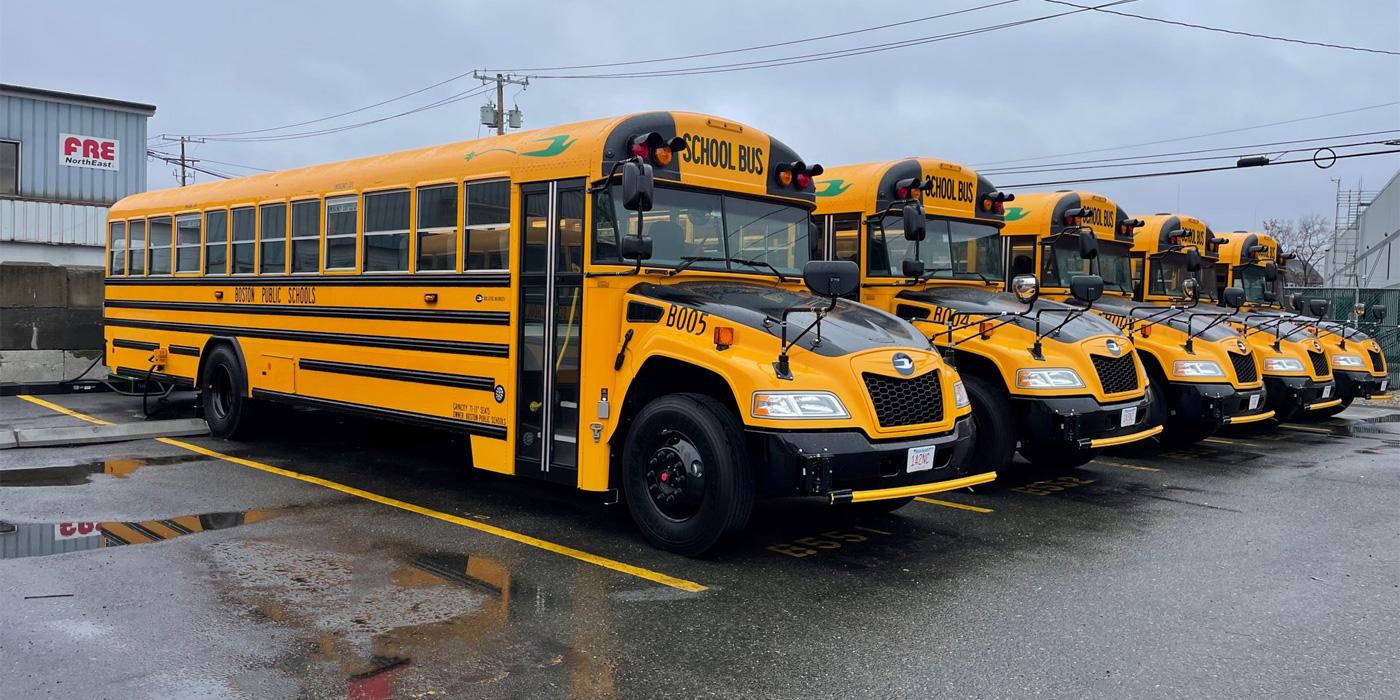
Boston is leveraging artificial intelligence technology to enhance the accuracy of school bus arrival times, aiming to improve the daily commute experience for thousands of students and their families. This innovative initiative seeks to address long-standing challenges in school transportation by providing real-time updates and minimizing wait times, positioning the city at the forefront of smart transit solutions.
Table of Contents
- Boston Implements Artificial Intelligence to Enhance School Bus Tracking
- How AI Algorithms Improve Precision in Arrival Times for Students
- Challenges Faced During Early AI Integration and How They Were Overcome
- Recommendations for Other Cities Adopting AI in School Transportation Systems
- in summary
Boston Implements Artificial Intelligence to Enhance School Bus Tracking
Boston’s school transportation system is undergoing a meaningful transformation with the integration of advanced artificial intelligence technology designed to improve the precision of bus arrival predictions. This innovative approach leverages real-time data analytics and machine learning algorithms to track fleet movements more accurately, providing parents and schools with up-to-the-minute updates. The AI-driven system can analyze variables such as traffic patterns, weather conditions, and route deviations, ensuring that school communities receive reliable and timely information.
Key enhancements brought by this technology include:
- Improved safety: Live tracking helps school officials respond quickly to route changes or emergencies.
- Enhanced communication: Automated notifications alert parents about delays or early arrivals via mobile apps.
- Efficient routing: AI optimizes school bus routes to reduce travel time and environmental impact.
Boston’s commitment to embracing smarter, data-driven solutions reflects its broader vision of using technology to refine public services and ensure a seamless daily experience for its students and families.
How AI Algorithms Improve Precision in Arrival Times for Students
Boston’s new AI-driven system leverages advanced machine learning algorithms to analyze real-time traffic patterns, weather conditions, and historical route data. This dynamic approach allows the system to continually refine bus arrival predictions, reducing the uncertainty that often frustrates students and parents. By processing vast amounts of data instantaneously,the AI can anticipate delays and adjust estimated arrival times with remarkable accuracy.
Key components contributing to improved precision include:
- Integration of live traffic updates from city infrastructure and GPS signals
- Adaptive learning models that evolve with seasonal and daily route variability
- Predictive analytics incorporating external factors like weather and school schedules
- Continuous feedback loops from driver inputs and sensor data
This multifaceted AI framework not only enhances scheduling reliability but also minimizes wait times, resulting in a more efficient and dependable transportation experience for Boston’s student community.
Challenges Faced During Early AI Integration and How They Were Overcome
Integrating AI into Boston’s school bus system was not without its hurdles. Initially, the project confronted significant data challenges, as legacy transportation systems lacked the real-time tracking capabilities necessary for accurate AI predictions. Inconsistent GPS signals and incomplete route data further complex early attempts. To address these issues,the team implemented robust data cleansing protocols and upgraded hardware on key bus routes,ensuring more reliable input for AI algorithms. Additionally, integrating AI with existing transportation workflows required overcoming resistance from operational staff wary of new technology.
To gain buy-in, the project leaders prioritized transparent communication and training sessions, emphasizing AI’s role as a support tool rather than a replacement. They also adopted an iterative approach, refining AI models based on frontline feedback and gradually scaling up the system across the fleet. Critical to success was the establishment of a cross-functional team that combined technical expertise with practical knowledge from transit operators. This collaborative strategy helped Boston not only overcome initial obstacles but also create a scalable,adaptive AI solution that markedly improved bus arrival accuracy.
Recommendations for Other Cities Adopting AI in School Transportation Systems
Cities planning to integrate AI into their school transportation systems should prioritize collaboration with local stakeholders including school officials,parents,and transportation providers. This ensures the tailored design of AI tools to address unique community needs and logistical challenges. Additionally, investing in robust data infrastructure is crucial to support real-time tracking and predictive analytics that underpin accurate bus arrival estimates. Leveraging AI to analyze historical traffic patterns, weather data, and route optimizations can deliver measurable improvements in reliability.
Key recommendations include:
- Establishing clear data privacy protocols to protect student information while enabling effective AI deployment.
- Engaging in pilot programs to test AI models in controlled environments before full-scale rollouts, minimizing disruption.
- Providing training for transportation staff to maximize the benefits of AI-powered systems and foster acceptance.
- Utilizing iterative feedback loops with users to continuously refine AI algorithms and improve system accuracy.
Adopting these strategic measures can help cities replicate Boston’s success in enhancing school bus punctuality, ultimately promoting safer and more efficient transportation for students. Furthermore, integrating emerging AI innovations-such as probabilistic models and generative AI for data analysis-can accelerate deployment and boost performance quality, as demonstrated by related AI advancements across scientific fields and data management systems [[1]](https://news.mit.edu/2025/futurehouse-accelerates-scientific-discovery-with-ai-0630) [[3]](https://news.mit.edu/2024/mit-researchers-introduce-generative-ai-databases-0708).
to sum up
As Boston embraces AI technology to enhance school bus arrival accuracy, the initiative marks a significant step toward improving student safety and streamlining daily commutes. With this forward-thinking approach, the city aims to set a new standard in urban transportation efficiency-ensuring that families, students, and schools can rely on timely and precise bus schedules. As the program unfolds, all eyes will be on Boston to see how AI-driven solutions can reshape public services in education and beyond.