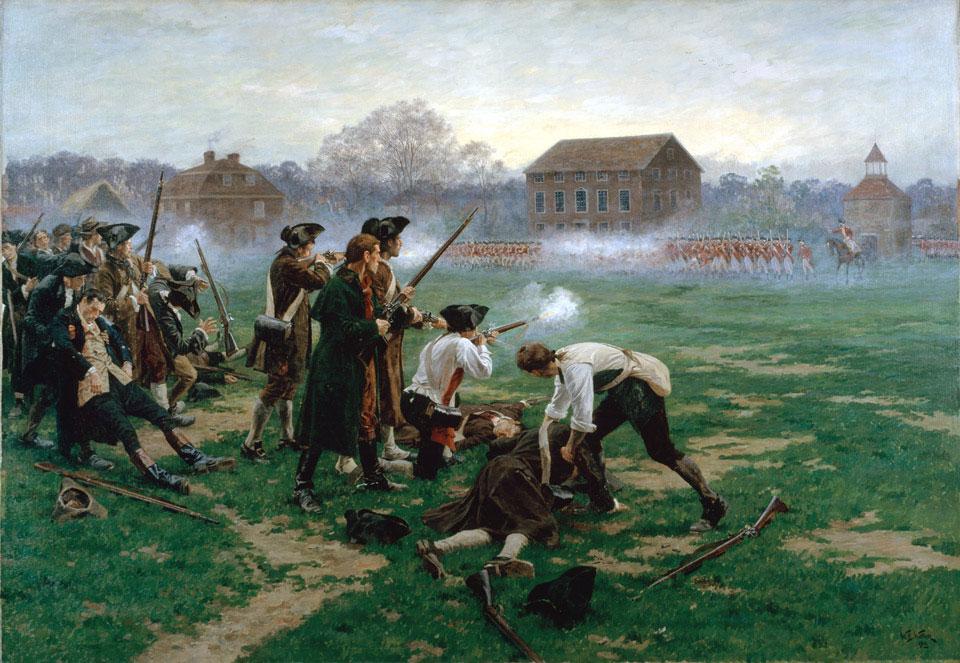
In the early dawn of April 19,1775,the quiet towns of Lexington and Concord in Massachusetts became the flashpoints of a conflict that would ignite a revolution. What would soon be known as “The Shot Heard ‘Round the World” marked the first armed confrontation between colonial militia and British troops, signaling the dramatic beginning of the American War of Independence. This pivotal moment not only changed the course of American history but also sent shockwaves across the globe, inspiring movements for liberty and self-determination far beyond the shores of the thirteen colonies.
Table of Contents
- The Spark That Ignited a Revolution
- Key Players and Their Roles in Lexington and Concord
- Strategic Lessons from the Opening Battles
- How Communities Can Preserve Revolutionary Heritage
- Key Takeaways
The Spark That Ignited a Revolution
In the dead of night on April 18, 1775, British troops embarked on a covert mission marching 18 miles towards Concord with orders to confiscate colonial arms. This decisive movement, aimed at quashing rebellious whispers among the American colonies, instead triggered an unprecedented clash that would forever alter the course of history. The first exchange of gunfire, later immortalized as the “shot heard ’round the world,” erupted in Lexington, signaling the birth of armed resistance and lighting a fuse that would ignite the American Revolution.
The British campaign was met with fierce opposition fueled by colonial determination. Ordinary men, untrained but resolute, stood against the might of the British Empire with remarkable courage. Key factors contributing to this pivotal moment included:
- Strategic colonial militia mobilization developed through widespread community networks.
- Heightened tensions over British attempts to disarm the colonies and stamp out perceived insurrections.
- Immediate,spontaneous local resistance that showcased the colonists’ unwillingness to submit quietly.
These elements coalesced into an explosive reaction that not only thwarted the British mission but also galvanized the colonies into a united front, setting the stage for the bloody struggle that would culminate in independence.
[[1]](https://historyhub.history.gov/citizen_archivists/b/citizen-archivists-blog/posts/the-battles-of-lexington-and-concord-the-shot-heard-round-the-world)[[2]](https://www.battlefields.org/learn/revolutionary-war/battles/lexington-and-concord)
Key Players and Their Roles in Lexington and Concord
At the heart of the first clashes were a small group of pivotal figures whose decisions shaped the dawn of revolution. Captain John Parker led the colonial militia at Lexington, famously commanding his men to stand their ground against the advancing British troops despite being vastly outnumbered. On the British side, Lieutenant Colonel Francis Smith commanded the regulars assigned to seize colonial arms and ammunition, setting the stage for confrontation. Meanwhile, colonial intelligence networks, epitomized by riders like Paul Revere and William Dawes, played a crucial role in alerting militias of the British movements, allowing Massachusetts militiamen to assemble rapidly in response.
The unfolding events pivoted on the actions of local militias, whose determination transformed the skirmishes at Lexington and Concord into a broader revolutionary spark. Key colonial leaders included Colonel James Barrett, charged with safeguarding the military supplies at Concord, and Dr. Joseph Warren, an influential patriot leader who organized resistance efforts. On the British side, officers faced the intricate task of maintaining order under increasing hostility from armed colonists, culminating in the intense firefight at the North Bridge. Their encounters laid bare the rising tensions and the determination on both sides to assert control, ultimately igniting a war that would reshape a nation.
- Captain John Parker - Colonial militia leader at Lexington
- Lieutenant Colonel Francis Smith – British commanding officer
- Paul Revere & William Dawes – Midnight riders and colonial messengers
- Colonel James Barrett – Protector of Concord’s armory
- Dr. Joseph Warren – Patriot strategist and organizer
Strategic Lessons from the Opening Battles
The initial confrontations at Lexington and Concord illuminated crucial strategic insights about guerilla tactics and the power of local intelligence in asymmetrical warfare. The colonial militias’ ability to mobilize swiftly and leverage intimate knowledge of local geography decisively countered the disciplined but less familiar British regulars. This underscored the importance of adaptability and adaptation over rigid traditional military formations. British forces experienced firsthand how supply lines and communication could be disrupted by decentralized opposition, demonstrating that control over the terrain was as vital as sheer firepower in the conflict’s opening phase.
Key strategic takeaways include:
- Rapid Intelligence Sharing: Local militias used effective communication networks to coordinate responses quickly.
- Utilization of Terrain: Familiarity with wooded and rural landscapes allowed colonial forces to execute ambushes and defensive tactics.
- Decentralized Command: Small, autonomous units operated without waiting for direct orders, maximizing responsiveness.
- Psychological Impact: The unanticipated resistance shattered British assumptions of colonial passivity, influencing subsequent campaign strategies.
How Communities Can Preserve Revolutionary Heritage
Communities play a pivotal role in safeguarding the legacy of revolutionary events by actively engaging in preservation efforts that transform history into a living experience. Maintaining historical landmarks such as battle sites,museums,and monuments ensures tangible connections to the past remain intact.Organizing annual commemorations, reenactments, and educational programs injects vitality into the heritage, allowing residents and visitors alike to appreciate the gravity and impact of events like the first shots at Lexington and Concord. Local partnerships with schools and historical societies also deepen public understanding and foster a shared commitment to remembrance.
Preserving revolutionary heritage calls for collaborative strategies that emphasize inclusivity and accessibility. Communities can:
- Digitally archive artifacts and oral histories, making them available to a global audience.
- Encourage storytelling from diverse perspectives to enrich the narrative beyond traditional accounts.
- Implement preservation-amiable zoning laws that protect historic sites from commercial development.
- Promote volunteer programs that engage citizens in active conservation efforts.
Through these combined initiatives, revolutionary heritage is not only protected but also transformed into a dynamic force that educates and inspires future generations.
Key Takeaways
The first shots fired at Lexington and Concord not only ignited the American Revolutionary War but also echoed across history as a powerful symbol of defiance and the fight for liberty. This pivotal moment marked the beginning of a new chapter in the quest for independence, reshaping the political landscape of the world. As we reflect on “The Shot Heard ‘Round the World,” its legacy continues to remind us of the enduring spirit of freedom and the profound impact of a single act in sparking monumental change.