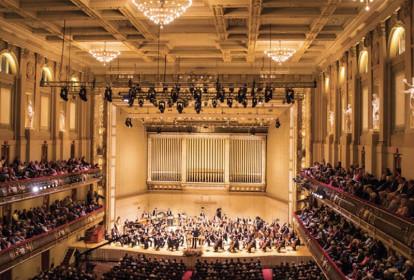
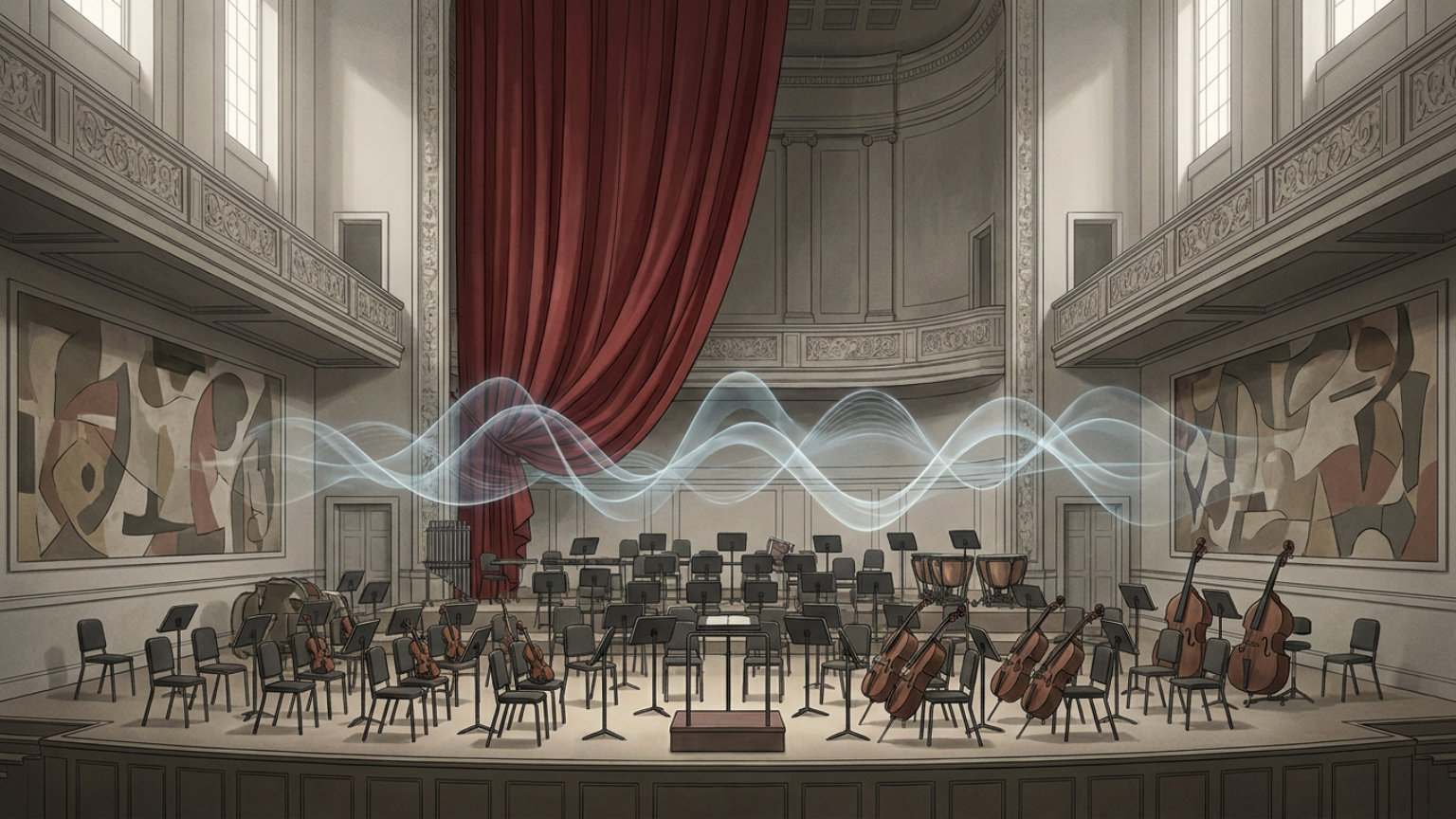
Boston Symphony Orchestra musicians will perform alongside an artificial intelligence system that responds to their playing in a new work by MIT composer Tod Machover, bringing an experiment in musical collaboration to Symphony Hall.
The roughly 25-minute composition, “already and not yet,” combines more than 80 orchestral performers with software developed to react to live sound. According to WBUR, the BSO commissioned the piece to celebrate the MIT Media Lab’s 40th anniversary. Machover helped establish the lab’s faculty in 1985.
The project treats AI as a musical instrument, not a service that produces a finished song from a written request. Its responses draw on what musicians play, creating an exchange that includes composed passages, elaborations on Machover’s writing and some improvisation.
Machover developed the system with Manaswi Mishra, a doctoral student working in his Opera of the Future group at the Media Lab. Mishra will join the performers onstage, directing how the technology responds to the orchestra. He can emphasize elements such as harmony and rhythm or alter the character of the resulting sound, WBUR reported.
That human role is central to the project’s design. Mishra has previously created AI instruments for experienced musicians, but this is his first such undertaking for a full orchestra. Both collaborators described an approach in which technology participates in a performance shaped by people rather than independently delivering a piece of music.
An exchange with room for surprise
The composition also has a civic theme. Machover conceived it as an exploration of dialogue and democracy, with the orchestra standing in for society. Its three movements — “Smash Up,” “Wake Up” and “Stand Up” — progress from crisis toward awakening and a search for new ways to communicate.
For individual performers, that concept includes opportunities to reshape solo passages and hear the system answer. The technology is designed to extend or vary a musician’s sound, but Machover does not determine every detail of its output. He told WBUR that unpredictability is intentional.
Preparing the software presented a practical challenge: Machover and Mishra could not work with the full orchestra during development. Instead, students from New England Conservatory helped them test it using violin, double bass and French horn. The collaborators introduced the system to some BSO players a week before the premiere.
When interviewed by WBUR ahead of the orchestral rehearsals, the pair still did not know precisely how the system would sound with the complete ensemble. That would become clear only when the musicians and technology came together at Symphony Hall.
A long-running musical experiment
Machover’s work at the intersection of composition and technology spans nearly five decades. Earlier projects include a technologically enhanced cello created for Yo-Yo Ma in 1991 and a robot opera that reached the Pulitzer Prize finals in 2012. He composed the new BSO work over many months in an 18th-century barn behind his Waltham home.
The premiere also comes amid concerns about AI’s implications for musicians, which Machover acknowledged to WBUR. Cellist Owen Young of the BSO approached the project with questions about its operation, but learning about it left him more intrigued than apprehensive. Young emphasized that this composition depends on human performance: The system responds to the players rather than taking their place.