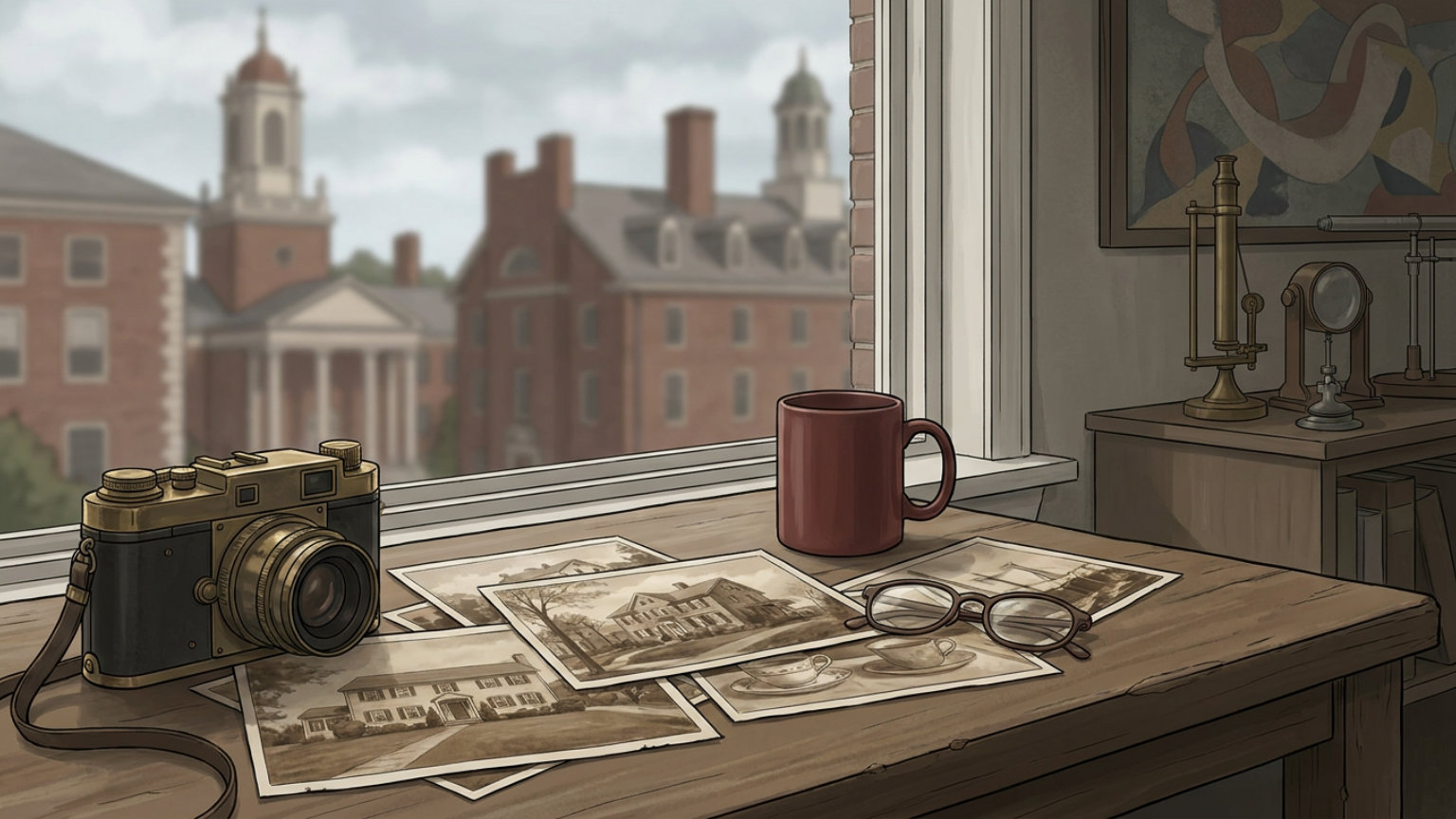
A photography exhibition at Harvard Art Museums is examining the distance between an appealing picture of postwar America and the more complicated country beyond the frame. Through 70 photographs, the show considers how professionals hired to document everyday occasions also helped construct an idealized version of the era.
Called “The Way We Never Were,” the exhibition draws on Harvard University’s American Professional Photographers Collection. According to WBUR, its images of weddings, dances, breakfasts and other gatherings invite visitors to question whether scenes that appear spontaneous can be taken as straightforward historical records.
The exhibition occupies the third-floor University Research Gallery and marks the collection’s 50th anniversary. Curators Audrey Sands, Madison Brown and Bridget Hinz organized the show, which places commissioned photographs alongside news imagery to draw attention to what those polished pictures include and what they exclude.
The collection was assembled by sociologist Barbara Norfleet, whose interest centered on documenting American life. It contains more than 20,000 prints and negatives, with material dating from the 1870s through the 1970s. The exhibition selects a narrower period rather than attempting to represent that entire century.
Sands and Brown told WBUR they wanted to consider Norfleet’s contributions to both sociology and photography, along with the collection’s relevance today. Concentrating on the years immediately following World War II also brought the exhibition closer to Norfleet’s own focus: ordinary customs and milestones for which families and institutions frequently employed photographers.
Looking beyond the polished scene
The show has five thematic sections addressing the postwar boom, suburban development, conformity, rituals and disruption, and professional photography itself. Their subjects range from delivery-room pictures associated with the baby boom to views of suburban houses. Another section examines photographers’ methods and working practices.
Those techniques are central to the exhibition’s questions. Sands told WBUR that carefully arranged photographs can nevertheless look candid, encouraging viewers to accept them as unmediated accounts of the 1950s. The curatorial approach asks visitors to look more closely at how such pictures were produced and the purposes they served.
News photographs reproduced as silkscreened backdrops provide a contrasting context for each section. In the area devoted to conformity, pictures of school classrooms, homecoming dances and Boy Scouts appear against an image of the March on Washington.
Brown described that juxtaposition to WBUR as a way to connect cheerful individual scenes with events experienced across the country. The display places the apparent order of the commissioned photographs within a broader setting, rather than allowing their smooth surfaces to stand alone as a portrait of American life.
The exhibition takes its title from Stephanie Coontz’s book “The Way We Never Were,” which examines the nuclear-family myth. Sands told WBUR that Coontz’s work informed the curators’ thinking about how photographs, television, movies and music reinforce familiar ideas about the past. Here, those familiar images become both historical evidence and objects of scrutiny.