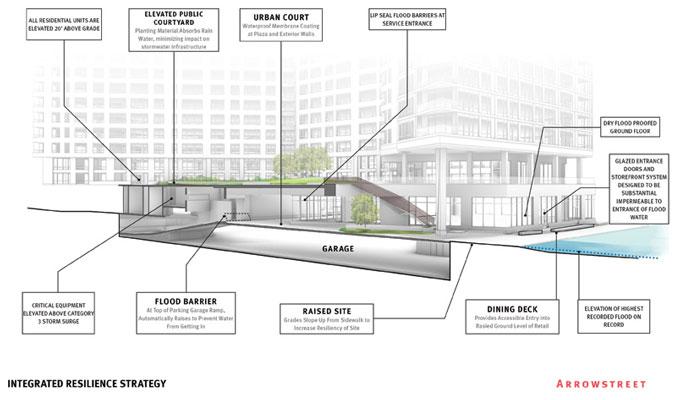
The Seaport District has officially launched a groundbreaking pilot project aimed at enhancing flood resilience in the area, responding to growing concerns over rising sea levels and increasingly severe storm surges. The initiative, unveiled today by city officials and local stakeholders, seeks to implement innovative infrastructure improvements and community-based strategies designed to mitigate flood risks and protect critical assets. As coastal cities nationwide grapple with climate change challenges,the Seaport District’s project represents a proactive step toward safeguarding both residents and economic activity in this vital urban hub.
Table of Contents
- Seaport District Unveils Innovative Flood Resilience Pilot Project
- Key Technologies and Infrastructure Enhancements at the Heart of the Initiative
- Community Engagement and Stakeholder Collaboration Drive Project Success
- Experts Recommend Expanding Flood Mitigation Measures Across Coastal Urban Areas
- Concluding Remarks
Seaport District Unveils Innovative Flood Resilience Pilot Project
The Seaport District has embarked on a groundbreaking pilot project aimed at bolstering the area’s defenses against increasingly frequent and severe floods. This initiative integrates advanced engineering solutions with community-centered approaches, focusing on sustainable water management and enhanced infrastructure resilience. Key elements include the installation of flood barriers, improved drainage systems, and the use of natural buffers such as wetlands to absorb excess water.These measures are designed not only to protect vital economic assets but also to safeguard residents’ health and wellbeing by minimizing contamination risks in floodwaters.
Community engagement forms a cornerstone of this pioneering effort, with residents receiving targeted guidance on best practices before, during, and after flood events. The project highlights crucial public health advice such as:
- Keeping homes well-ventilated to reduce moisture buildup.
- Wearing protective personal equipment during cleanup.
- Avoiding flood-contaminated areas, especially for children, until conditions improve.
Through this comprehensive approach, the pilot sets a new standard in urban flood resilience, positioning the Seaport District as a model for other vulnerable regions facing the reality of climate-driven flooding.
Key Technologies and Infrastructure Enhancements at the Heart of the Initiative
State-of-the-art flood monitoring systems have been integrated across key points in the Seaport District, allowing for real-time water level tracking and predictive analytics. These advanced sensors, coupled with AI-driven forecasting models, enable officials to anticipate flooding events with unprecedented accuracy, leading to swifter, more targeted responses. In addition, enhanced communication networks ensure that alerts reach both emergency responders and local communities without delay, strengthening overall preparedness.
Infrastructure improvements are central to the initiative’s success, prominently featuring elevated embankments and flood barriers designed to withstand increasingly severe weather patterns. Alongside these structural defenses, the project incorporates sustainable drainage systems, including permeable pavements and retention basins, which help manage stormwater and reduce overflow risks. These enhancements address not only immediate flood threats but also bolster the district’s resilience against long-term climate impacts.
Community Engagement and Stakeholder Collaboration Drive Project Success
The success of the flood resilience pilot project in the Seaport District is a testament to the power of inclusive community engagement and robust stakeholder collaboration. From the project’s inception, local residents, business owners, environmental experts, and municipal leaders have been brought into the conversation to shape strategies that reflect both community needs and technical feasibility. By actively soliciting feedback through town hall meetings, workshops, and interactive forums, the project team has fostered a sense of ownership and trust, ensuring that diverse voices directly influence the planning and implementation phases.
Key collaborative efforts include:
- Regular consultation with neighborhood associations to address specific flood vulnerabilities
- Partnerships with environmental NGOs to integrate sustainable, nature-based solutions
- Coordination with local government agencies to streamline permitting and funding processes
- Engagement of local schools and youth groups to promote awareness and education around climate resilience
This multi-faceted approach ensures that the project is not only technically sound but also socially sustainable, setting a new benchmark for future urban resilience initiatives.
Experts Recommend Expanding Flood Mitigation Measures Across Coastal Urban Areas
Urban planners and environmental experts are urging a significant expansion of flood mitigation strategies in vulnerable coastal cities. As extreme weather events intensify due to climate change, these densely populated areas face heightened risks of infrastructural damage and humanitarian crises. Authorities emphasize integrating advanced drainage systems, reinforced sea barriers, and sustainable urban design to reduce flood impact effectively.
Key recommendations include:
- Investment in green infrastructure such as wetlands and rain gardens to absorb excess water.
- Upgrading early warning systems and emergency response frameworks to ensure rapid action.
- Community engagement programs to increase public awareness and preparedness.
- Collaborative planning between local governments, scientists, and engineers to tailor solutions for specific geographic and socio-economic contexts.
Experts assert that a proactive approach, combining infrastructure improvements with policy reform and community resilience efforts, is crucial to safeguarding coastal urban populations from future flood events.This comprehensive strategy aims to mitigate not only the immediate impact but also the long-term socioeconomic consequences of flooding.
Concluding Remarks
As the Seaport District embarks on this pioneering pilot project, it sets a critical precedent for urban flood resilience amid escalating climate challenges. Stakeholders and residents alike will be watching closely to gauge its effectiveness and potential for scaling. With rising sea levels posing an increasing threat to coastal communities nationwide, innovative efforts like this may well chart the course for future infrastructure planning and disaster preparedness. The coming months will be pivotal in assessing how this initiative can safeguard the Seaport District and serve as a model for other vulnerable regions.